

Keeping your strata building looking its best is a shared effort between owners, the committee and the strata manager. While there are heaps of routine maintenance tasks to get done, painting projects play a pretty big role in keeping the building in good nick, adding value and making sure residents have a clean and safe place to live.
Whether its a small apartment block or a massive multi-storey complex, strata painting needs to be done with a planned, compliant and well-coordinated approach.
Why Strata Buildings Need Regular Painting
Strata buildings are stuck in the harsh Australian climate – UV, coastal winds, humidity, and those crazy stormy seasons. Over time the paint starts to break down, resulting in:
- Fading and discoloration because the colour just fades away
- Paint peeling and cracking because it can’t take the weather conditions
- Moisture getting in through exposed surfaces, leading to early deterioration
- Rust on metal parts because they’re exposed to the elements
- Your building’s kerb appeal goes down and tenants are less happy as a result
A professional strata painting job gets the protective coating system back up to scratch and extends the lifespan of the building’s exterior and interior common areas.
Key Areas Included in Strata Painting Projects
A typical strata painting project covers:
- Exterior Building Surfaces
Facades – the big front face of the building
Render and brickwork – the colour and texture of the building
Balconies and balustrades – the railings and ledges on the balconies
Eaves, soffits and fascia – the underside of the roof and the edges of the roof tiles
Aluminium windows and metal trims – the windows and framing around the windows
- Interior Common Areas
Stairwells – the lifts and landings that connect the different floors
Hallways – the long corridors that connect the apartments
Lobbies and foyers – the main entrance areas of the building
Fire doors and common room areas – the doors and rooms that everyone shares
Lift interiors (using specialist metal coatings) – the inside of the lifts
- Car Parks & Basements
Walls and ceilings – any painted surfaces in the car park or basement
Line marking – the lines on the floor that show where to park
Low-VOC, mould-resistant coatings – special paints that are good for the environment and won’t grow mould
- Safety & Compliance Elements
Safety bollards – the little posts that stop cars and pedestrians crashing into each other
Service rooms – the rooms that house the building’s pipes, electrical systems and other services
Fire staircases – the emergency stairs that people use to get out in case of a fire
Anti-graffiti protective coatings on vulnerable surfaces – special coatings that stop graffiti from sticking to the walls
Planning a Successful Strata Painting Project
Unlike a residential painting job, strata projects involve a bunch of stakeholders – owners, committees and strata managers. Getting it done smoothly requires planning, communication and documentation.
- Initial Inspection
A team of professionals goes through the building to check for:
- Cracks in the walls and floors
- Water damage from leaks or flooding
- Rust and corrosion on metal parts
- Failed coatings that need to be repaired
- Structural issues that need to be fixed
This helps to get a accurate and transparent proposal to the owners.
- Selecting the Right Paint System
Strata buildings often need special paints that are good for the environment and won’t grow mould. The right paint system will last up to 10-15 years before it needs to be repainted.
- Clear Communication with Residents
Every resident should know:
When the project is starting and finishing
What access will be needed – will the painters be coming into their unit?
What to expect in terms of noise, dust or temporary closures
Clear signs and communication will reduce disruption.
- Professional Access & Safety
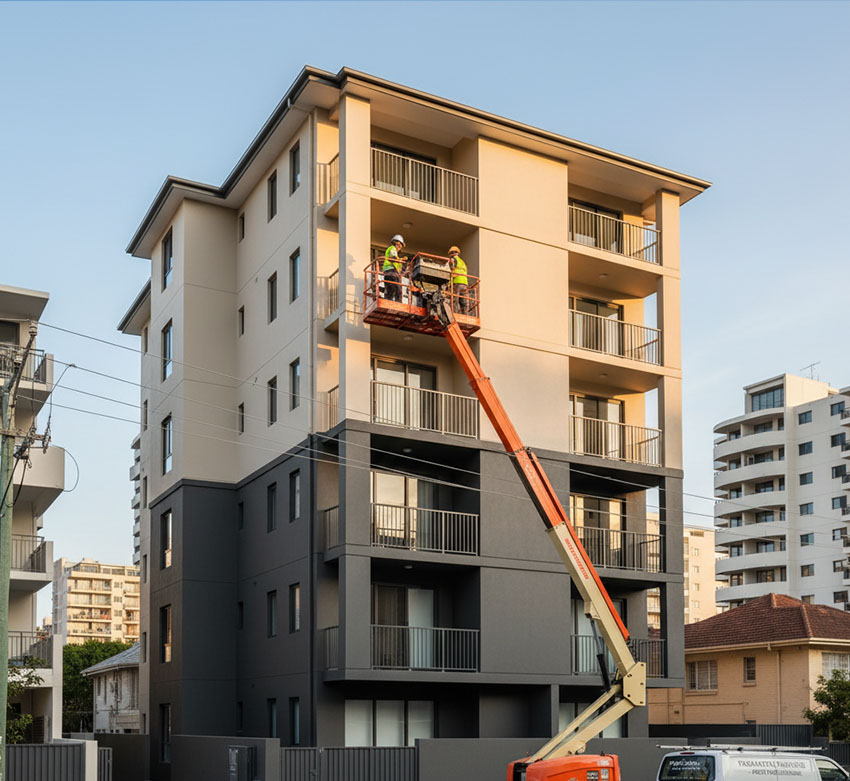
Strata painting requires safe access to heights, which means:
Scaffolding – a platform to stand on while painting
Boom lifts – a bit of machinery that gets you up high
Swing stages – a platform that swings out over the side of the building
Rope-access specialists – people who climb up the side of the building on ropes
Compliance with WHS guidelines and Australian Standards (AS/NZS 2311) is vital.
- Quality Control & Final Inspection
A good contractor will:
Conduct daily checks to make sure everything is going okay
Provide regular progress updates to the owners
Do a final walkthrough with the strata committee to make sure everything is done to a high standard
Offer a workmanship warranty in case anything goes wrong.
How Strata Painting Adds Value
A well-executed strata repaint provides heaps of long-term benefits:
✔ Improved Building Lifespan
New paint protects the structure from moisture, corrosion and UV damage.
✔ Increased Property Value
A modern, clean appearance makes the building more attractive to buyers and renters.
✔ Better Resident Satisfaction
New paint improves the overall living experience.
✔ Lower Maintenance Costs
Preventative painting reduces expensive repairs in the future.
Common Challenges in Strata Painting
- Strata projects can be complex due to:
- Large surface areas that need to be painted
- Access restrictions that limit where the painters can get to
- Resident sensitivity to noise or odours that can cause disruption
- Weather interruptions like rain or extreme heat
- Budget limitations that restrict what can be done
This is why choosing a professional strata painting contractor is so important.
Choosing the Right Contractor
When selecting a strata painting specialist, look for:
Experience with multi-storey and strata-managed buildings
Proper licensing and insurance
WHS compliance
Use of reputable brands like Dulux, Wattyl and Taubmans
Transparent pricing and staged progress payments
Ability to work with committees and strata managers
Workmanship warranty in case anything goes wrong.
Final Thoughts
A strata painting maintenance is more than just a cosmetic refresh – it’s an investment in the building’s long-term protection, safety and value. With the right planning and the right contractor, the process can be smooth, cost-effective and highly beneficial for the entire community.
If you’re getting ready to repaint your strata building now is the ideal time to consider a detailed inspection and long-term maintenance plan.
Comments are closed.