

Construction sites are the perfect storm of chaos – with materials piling up, trades dodging in and out of the work zone, and deadlines looming – it’s a recipe for disaster for your newly finished surfaces. Before you know it, your beautiful floor is scratched, your pristine doorway is chipped, your benchtop is stained or your staircase is damaged – the list of costly mistakes is endless.
For builders, site supervisors, renovators and contractors, protecting finished work is just as important as getting the work done in the first place. A damaged floor, a chipped doorframe, a stained benchtop or a wobbly staircase doesn’t just cost you time and money it also puts your reputation at risk and risks delaying the project handover.
Many construction defects aren’t down to shoddy workmanship – they happen because finished areas weren’t properly protected during the next phase of the project.
Here are the 7 things builders often forget to protect on a construction site – starting with the most important one.
1. Floors
Floors are often the most vulnerable area on any construction site – with every trade traipsing over them, tools and materials being dragged across them, and dust, mud, paint, adhesives and equipment taking their toll. With so many potential hazards, it’s a wonder floors are protected at all – but they should be the first place to consider when it comes to temporary protection.
Whether you’re working with timber, hybrid, tiles, vinyl, polished concrete, carpet, laminate or stone floors, damage can be expensive to fix – and even a small scratch on a timber floor can need sanding and refinishing. That’s why it’s worth taking the time to choose the right floor protection.
Some common causes of floor damage include:
- Heavy foot traffic
- Dragging tools and ladders and materials
- Paint spills and plaster dust
- Dropped screws, nails and sharp objects
- Moving appliances, joinery or furniture
- Dirt and grit trapped under shoes
- Moisture and mud from outside
To avoid this, get your floor protection sorted before high risk work begins – and make sure to choose a solution that’s suitable for the surface type, project duration and site traffic.
For example, timber floors might need breathable protection, while tiled or concrete areas might need impact-resistant or water-resistant protection. And if you’ve got high-traffic access paths, you’ll need stronger protection than if you’re working in a quiet room.
That’s where a specialist supplier like Floor Protection Australia can help – they can advise on the best protection for your construction, renovation, painting commercial fit-out or handover preparation project.
2. Door Frames and Door Edges
Doorframes and door edges are another area that’s super prone to damage on site – all those trades carrying tools and materials through the doorway take their toll. One small knock can chip paint, dent timber or damage freshly finished surfaces.
So make sure you protect your main entry doors, internal door frames, freshly painted door edges, sliding door tracks, fire doors and commercial tenancy doors.
Some simple solutions include foam guards, cardboard protection and temporary edge protectors – just make sure to tell your trades which access points to use so that protected routes are clear and controlled.
3. Stairs and Stair Nosing
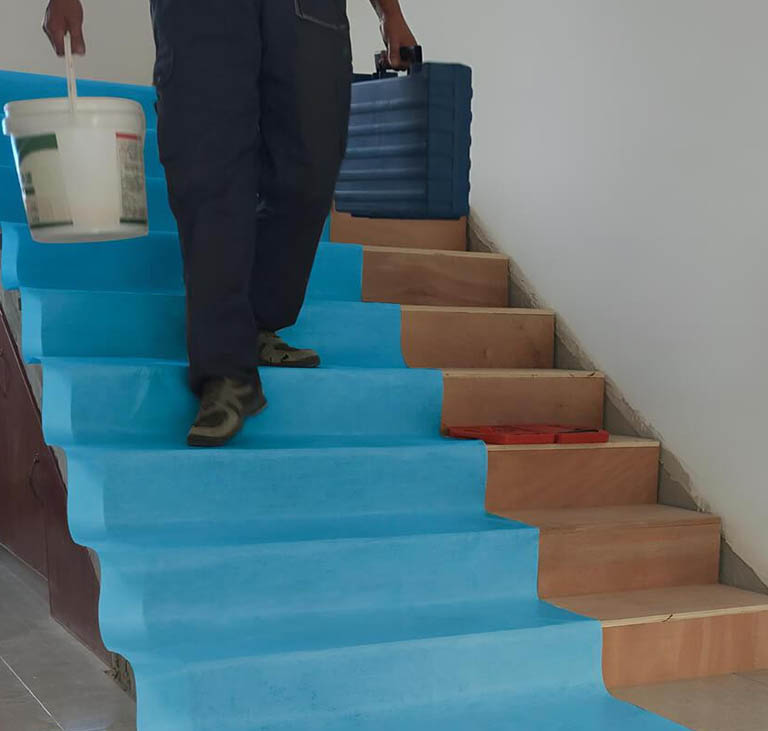
Stairs are a main access route on most construction sites, so it’s no surprise that they can take a beating – especially in multi-level homes, townhouses, apartments, offices and commercial fit-outs. Because of this, stair treads and stair nosings can become worn, chipped, scratched or stained before the project is even finished.
And it’s not just the treads and nosings that are at risk – stairs are also a safety concern with loose protection, dust and slippery surfaces creating trip and slip hazards.
So it’s worth taking the time to protect your stairs properly – and that means using secure, visible and suitable protection for regular foot traffic.
Some common stair risks include:
- Trades carrying tools and materials between levels
- Dust and debris collecting on treads
- Paint or plaster spills
- Impact damage to stair nosing
- Scratches from ladders or equipment
- Damage to timber, carpet, tile or concrete finishes
4. Benchtops and Cabinetry
Kitchens, bathrooms, laundries, reception counters and joinery areas are often fitted before all the trades have finished – so it’s no surprise that they can become accidental work surfaces – especially for those hardworking trades.
The Common Mistake on Construction Sites – Allowing Trades to Damage Finishes
Its not uncommon for trades on construction sites to slap whatever tools or materials they need on a newly finished benchtop without giving a moments thought to the potential damage that could be caused. And it’s a costly oversight – stone, timber, stainless steel, engineered surfaces, and laminate benchtops can all be scratched, chipped, stained or marked with relative ease.
And its not just benchtops, of course – cabinet doors and panels are also vulnerable to damage. A small scratch on a new cabinet face can be a real pain to repair without having to replace the entire panel.
Builders need to take steps to protect the following surfaces:
- Kitchen benchtops
- Bathroom vanities
- Laundry benchtops
- Reception counters
- Built-in wardrobes
- Cabinet doors and drawer fronts
- Joinery panels
- Splashbacks
The protection needs to be clean, non-abrasive and suitable for the surface. No matter how tempting it might be to place heavy tools directly on finished joinery – even if it is covered – the risks are just too great.
5. Windows, Glass and Aluminium Frames
Windows and glass are often installed early on in a construction project to secure the building. But that leaves them exposed to all sorts of hazards as the rest of the work gets underway: plastering, painting, grinding, tiling – you name it.
Glass can get scratched by dust, sand, cement or metal particles. And aluminium frames can be marked by tools, sealants, paint or cleaning chemicals. And don’t even get us started on stickers and tapes – if they’re not suitable for the surface or are left on for too long, they can leave behind nasty residue.
Some of the common risks here include:
- Paint overspray
- Render and cement splatter
- Scratches from cleaning dirty glass
- Damage from grinders or cutting work nearby
- Tape residue on frames
- Dents from ladders or materials
The solution is to mask or cover windows and frames before getting into any messy work. And make sure that any protective film or tape you use is suitable for the surface – especially when it comes to powder-coated or anodised frames.
6. Walls and Corners
Walls are often painted or finished before all the site activity has wrapped up. Which leaves them vulnerable to scuffs, dents, chips and marks as the final stages of construction get underway.
Corners are particularly exposed. When materials are being moved through hallways and rooms, plasterboard corners and freshly painted surfaces can get damaged all too easily. Even small marks can stand out like a sore thumb during final inspection.
Builders need to take steps to protect the following surfaces:
- Hallway corners
- Entry walls
- Lift lobby walls
- Freshly painted feature walls
- Stairwell walls
- Skirting boards
- High-traffic corridors
- Commercial common areas
Temporary corner guards, wall protection sheets, careful access planning and clear trade instructions can all help reduce the risk of damage. And in narrow spaces, it’s a good idea to create designated material movement routes.
7. Finished Fixtures and Fittings
By the time a construction project is wrapping up, many fixtures and fittings have already been installed. But that leaves them vulnerable to damage as work continues. If they’re not covered or clearly protected, they can be easily damaged.
Some common examples include:
- Tapware
- Sinks and basins
- Toilets
- Light fittings
- Switches and power points
- Appliances
- Mirrors
- Handles and hardware
- Air-conditioning vents
- Balustrades
- Handrails
These items may seem small compared to flooring or walls, but replacement costs can add up in a hurry. And if they’re damaged, it can delay handover if replacement parts aren’t immediately available.
A simple protection plan can go a long way in preventing these issues. Builders should cover sensitive items, avoid using finished fixtures as work supports and inspect them before final cleaning.
Why Builders Should Plan Protection Early
Protection shouldn’t be left until the final stage of the job. By then, damage may have already happened.
A good construction site protection plan should start before finished surfaces are installed or exposed. Builders need to think about the following:
- Which surfaces are already complete
- Which trades still need access
- Where materials will be delivered and stored
- Which areas have the highest traffic
- What the main risk is (moisture, dust, paint or impact?)
- How long protection needs to remain in place
- Who is responsible for maintaining protection
Clear communication is also key. All trades need to know which areas are protected, what they can and can’t move and who to speak to if protection needs to be lifted or replaced.
The Cost of Not Protecting Finished Surfaces
Failing to protect finished surfaces can cost far more than the protection itself.
Damage may lead to:
- Repainting
- Floor repairs
- Timber sanding and refinishing
- Tile replacement
- Carpet cleaning or replacement
- Joinery repairs
- Delayed handover
- Client complaints
- Disputes between trades
- Reduced profit margin
In competitive building and renovation work, small defects can affect the client’s overall impression of the project. A well-protected site shows professionalism, care and attention to detail.
Floors Deserve the Most Attention
While every finished surface matters, floors are usually the most at risk. They’re exposed from the moment they’re installed until the day of handover. And they carry the weight of people, tools, equipment and materials throughout the entire project.
That’s why builders should treat floor protection as a standard part of site preparation – not an optional extra.
Temporary Floor Protection: The Secret to a Stress-Free Construction Site
Reducing the risk of scratches, stains, dents, spills and just general wear & tear on a building site during construction is a no brainer – its pretty much a given! A protected site is a site that’s cleaner and easier to hand over to the client in the end.
We at Floor Protection Australia help builders, contractors, tradespeople renovating, painting, and commercial fit-out teams, keep their sites protected from the elements and other hazards that come with building. With so many different types of flooring to choose from – timber, tile, vinyl, concrete, carpet, hybrid and just about anything else – you need to know you’ve got the right protection for your job.
The Pitfalls of a Poorly Protected Site
Construction sites are chaotic places – the trades come and go, one thing’s happening one minute and another the next. Without proper protection, even with the best of workmanship, that finished product is going to get damaged before its even been shown to the client.
Builders & contractors need to keep their eyes on the floors, door frames, stairs, bench tops, windows, walls & all the fixtures. Its these places that are most often forgotten – yet it’s these places that catch the eye of the client when they get to hand over the keys to their new place.
Having a clear plan for protecting your sites temporary floors can save you time, reduce the number of defects & save you a stack of cash, all while delivering a job that looks like it was done by a professional.
For reliable temporary floor protection solutions designed for builders, contractors, renovators, painters, and commercial fit-out teams, visit floorprotection.com.au for construction floor protection Australia.
Comments are closed.